Furnace Repair in Guelph
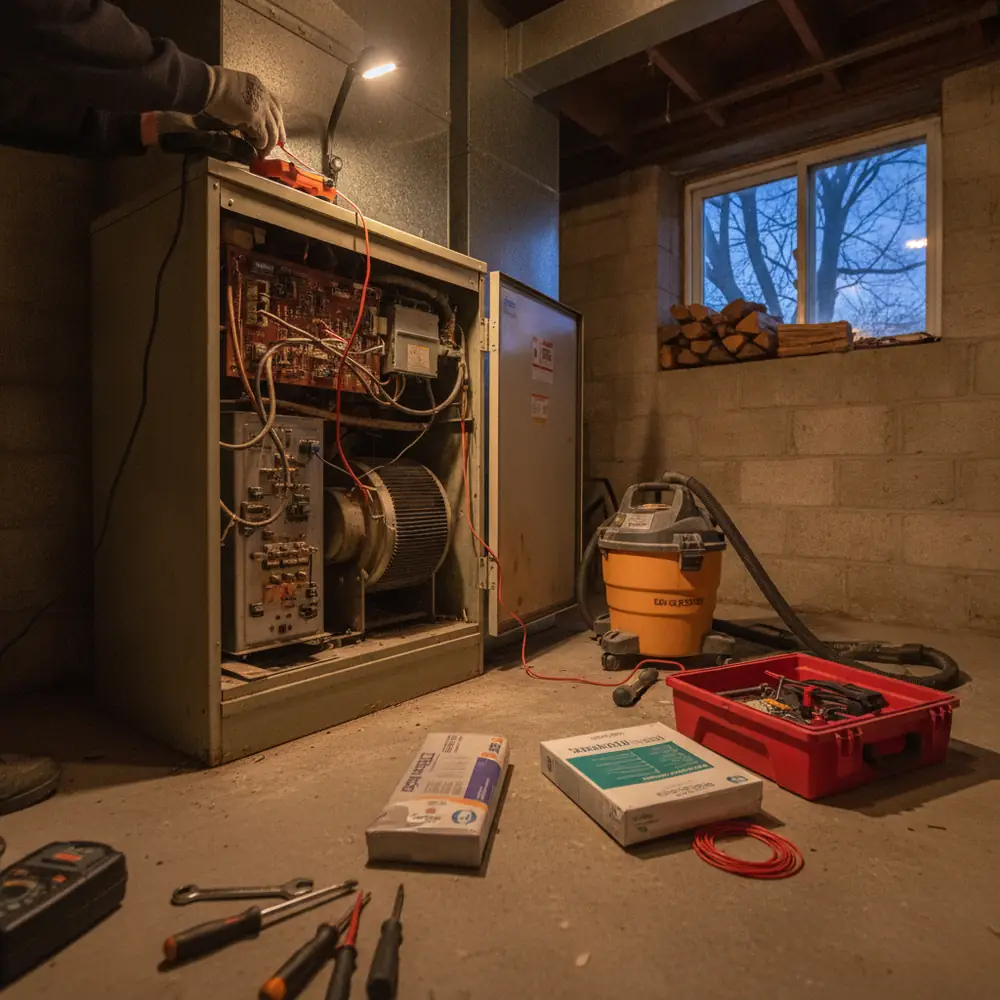
Most no-heat calls trace to a handful of common failures: a cracked or fouled igniter, a failed control board, a bad inducer or blower motor, a tripped flame sensor reading, or a clogged filter choking airflow until the system shuts itself down on a safety limit. A licensed technician diagnoses the actual fault code and component before quoting — not a guess-and-replace approach.
Because a dead furnace in a Guelph January is genuinely dangerous — frozen pipes can follow within hours in a bad cold snap — no-heat calls get priority dispatch around the clock, weekends and holidays included.
- Full diagnostic reading fault codes, not guesswork
- Common parts (igniters, flame sensors, control boards) often carried on the truck
- 24/7 emergency dispatch for no-heat calls
- Straight talk on repair vs. replace once your furnace is past ~15 years
What it costs in Guelph
- Diagnostic call: $100–$150 (credited toward the repair)
- Common part repair (igniter, flame sensor, capacitor): $250–$450
- Major component (control board, blower motor, inducer): $500–$1,200
- After-hours/overnight emergency callout: premium applies, quoted before dispatch
Furnace Repair FAQs
How fast can someone get to a no-heat call?
Same-day for daytime calls, and 24/7 dispatch for genuine no-heat emergencies — priority goes to homes with no heat source at all, especially overnight in cold weather.
Is my furnace worth repairing or should I replace it?
Under 10 years old with a moderate repair: usually repair. Over 15 years with a major component failure (heat exchanger, control board on an obsolete model): replacement is often the better financial call, and we'll walk through the real numbers, not just push a sale.
Why does my furnace keep shutting off after a few minutes?
Classic sign of a safety limit trip — often a dirty filter restricting airflow, a failing flame sensor, or an overheating issue. This needs a proper diagnostic, not just a filter swap and hope.
Do you carry parts on the truck or do I wait for an order?
Common failure parts (igniters, flame sensors, capacitors, standard motors) are typically stocked. Less common or brand-specific control boards sometimes require an order — we'll tell you which situation applies at diagnosis.